




DIGITAL ACCESSIBILITY · PUBLIC SECTOR · BGG · EN 301 549 · WCAG 2.2
BITV 2.0 – the regulation that makes accessibility mandatory for public authorities.
Whilst the private sector has only been subject to the BFSG since 2025, the public sector has been governed by its own set of regulations for considerably longer: the BITV 2.0. It requires public authorities to ensure that their websites, apps and digital administrative processes are accessible – and in some respects it even goes beyond the general requirements. On this page, we explain in simple terms what the BITV 2.0 requires, how it differs from the BFSG and how public bodies can provide robust evidence of their compliance.
Trusted by leading companies across the DACH region
Featured as an expert on ZDF WISO








What the BITV 2.0 is and who it applies to
BITV 2.0, officially known as the Accessible Information Technology Regulation, is the German regulation that requires public sector bodies to ensure digital accessibility. It is based on the Disability Equality Act (BGG) and implements EU Directive 2016/2102 on the accessibility of websites and apps operated by public sector organisations. Its current version has been in force since 25 May 2019.
The regulation is primarily aimed at federal public authorities. At state level, separate state regulations apply; however, their content is closely aligned with the BITV 2.0. The scope covers not only websites and mobile applications, but also, explicitly, electronically supported administrative processes such as electronic records management and case handling.
BITV 2.0 and BFSG – why two sets of regulations co-exist
This distinction regularly causes confusion, yet the logic behind it is clear. Both sets of regulations are based on European law, but apply to different areas. The BITV 2.0 implements the Web Accessibility Directive and applies to the public sector – government bodies, authorities and public institutions. The BFSG, on the other hand, implements the European Accessibility Act and places obligations on the private sector, such as online shops, banks and telecoms providers. The key common factor is that both refer to the same harmonised standard for technical implementation: EN 301 549. So anyone who complies with the standard is working on the same basis – regardless of whether the obligation arises from the BITV or the BFSG.
What standard BITV 2.0 stipulates
One particular feature of the current version is worth noting: BITV 2.0 no longer sets out the technical requirements itself, but refers to the harmonised standard published in the Official Journal of the EU – currently EN 301 549, version V3.2.1, which is based on WCAG 2.1 Level AA. If these requirements are met, the website is presumed to be accessible. Furthermore, the Regulation stipulates that, where the standard does not cover specific user requirements, supplementary measures must be taken in accordance with the state of the art. This includes, amongst other things, standards on software ergonomics and, explicitly, ISO 14289 on the accessibility of PDF documents. This means that document accessibility is not optional for public authorities, but is part of their statutory duty.
The additional obligations that go beyond the standard
This demonstrates that BITV 2.0 demands more than mere technical compliance. Public authorities must provide an accessibility statement that transparently sets out the current state of accessibility, any known limitations and a feedback mechanism. In addition, there is a requirement not found in the private sector: the homepage must provide basic explanations in German Sign Language and in plain language. These elements are specifically aimed at people who cannot be reached by text-only content and are a mandatory standard for federal authorities. It is worth noting that it is precisely these additional obligations that are not covered by standard automated tests – they require deliberate editorial and design implementation.
Monitoring, mediation and dealing with defects
Unlike in the private sector, where market surveillance and warnings create pressure, the public sector has its own enforcement mechanisms. A supervisory body regularly checks the services provided by public bodies for compliance and reports on its findings. People with disabilities can report barriers, and an arbitration board is available to deal with contentious cases. The pressure to maintain a good reputation and justify one’s actions is therefore high, as public bodies are under particular scrutiny and are expected to set an example. Those who can demonstrate compliance not only protect themselves against complaints but also visibly fulfil a social mandate.
From the regulation to the statement.
This is how public authorities can ensure they comply with the BITV.
The requirements of BITV 2.0 are demanding because they combine technical compliance, document accessibility and additional editorial obligations. The Access Suite is designed precisely to handle this interplay.
Access Score® provides a clear overview: with this free scan, public sector organisations can see where their digital services stand in just a few minutes.
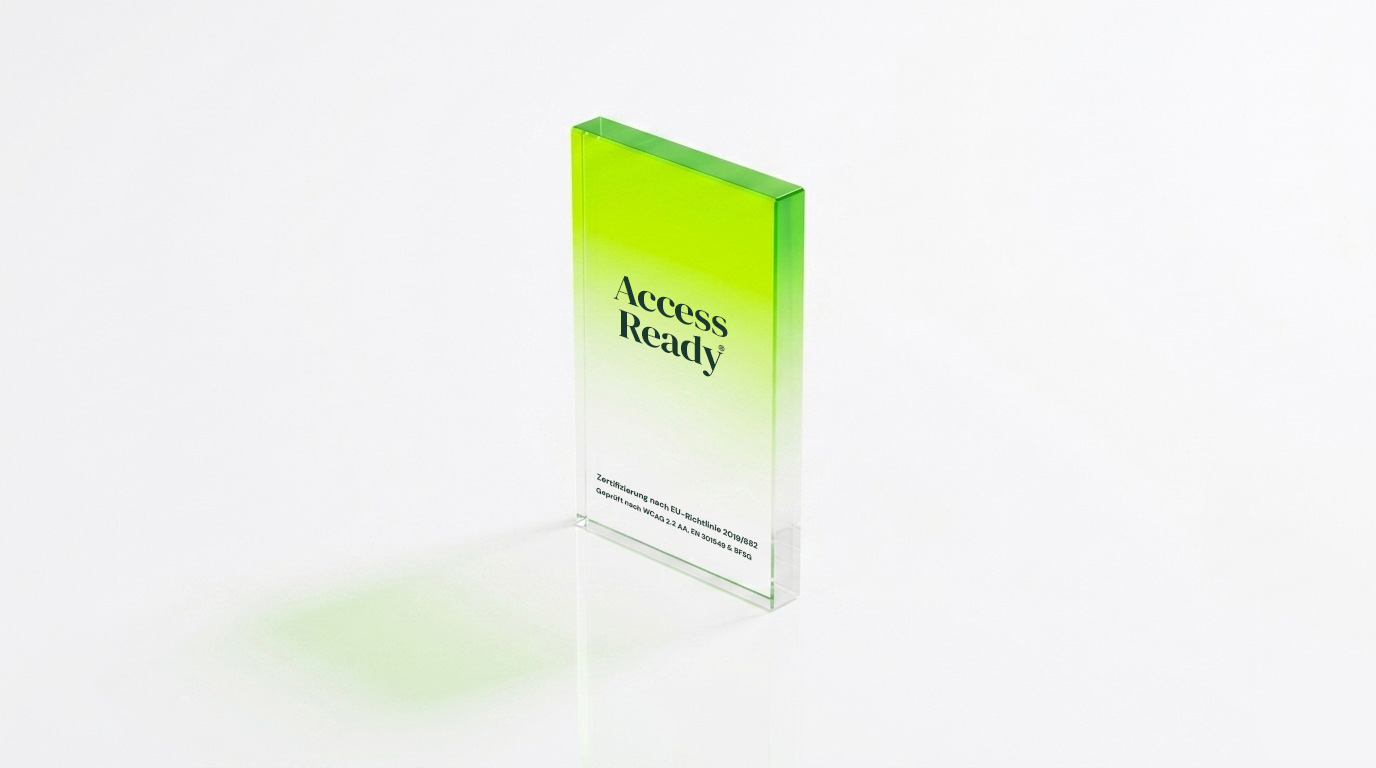
This robust evidence is provided by Access Ready®, our in-depth audit in accordance with EN 301 549, which involves actual users of assistive technologies and results in the legally binding ifdb certificate.
Access Doc® meets the PDF accessibility requirements set out in ISO 14289, as expressly stipulated by the Regulation, and converts even large volumes of documents into accessible PDFs.
And because public sector organisations are regularly monitored, Access Guard® maintains the level of security achieved through continuous monitoring – so you remain on the safe side even after every update.
FAQ
Frequently asked questions about BITV 2.0
What is the BITV 2.0, explained simply?
BITV 2.0 is the Accessible Information Technology Regulation. It requires public institutions in Germany to ensure that their websites, apps and digital administrative processes are accessible, thereby implementing EU Directive 2016/2102.
What is the difference between BITV 2.0 and BFSG?
BITV 2.0 applies to the public sector and is based on the Web Accessibility Directive. The BFSG applies to the private sector and is based on the European Accessibility Act. Both refer to the same technical standard, EN 301 549.
Who does the BITV 2.0 apply to?
Primarily for federal government bodies. At state level, specific state regulations apply, which are closely modelled on the BITV 2.0. The scope covers websites, mobile applications and electronic administrative processes.
What technical standard does BITV 2.0 stipulate?
The Regulation refers to the harmonised standard EN 301 549, currently in version V3.2.1, based on WCAG 2.1 AA. In addition, best practice should be followed, for example in accordance with ISO 14289 for accessible PDFs.
What additional obligations does BITV 2.0 impose?
In addition to technical compliance, it requires a statement on accessibility, including a feedback mechanism, as well as basic explanations in German Sign Language and plain language on the homepages of federal public institutions.
What happens in the event of breaches of the BITV 2.0?
A supervisory body regularly reviews public services. People with disabilities can report barriers, and an arbitration body is available to resolve disputes. The pressure to justify one’s actions and protect one’s reputation is correspondingly high.
How do public authorities demonstrate their compliance?
Through a documented audit in accordance with EN 301 549 and a robust certificate. The ifdb certificate from Access Ready® serves as proof of due diligence vis-à-vis supervisory bodies and the public.
Be a role model, rather than just fulfilling your duties.
Public sector organisations are under particular scrutiny – and this gives them the opportunity to set an example by treating accessibility not as a burden, but as a matter of course. Let us work together to assess the current state of your digital services and identify the most direct route to robust BITV 2.0 compliance.
BITV 2.0 in practice – understanding the regulation, ensuring compliance for public authorities
BITV 2.0 is the binding framework for digital accessibility in public bodies in Germany and the public-law counterpart to the BFSG. Anyone wishing to consult the original text of the regulation can find it in full at gesetze-im-internet.de, whilst the Federal Centre of Expertise on Accessibility provides a detailed overview of the practical requirements and additional obligations. Both sources show that BITV 2.0 demands far more than simply ticking a technical box.
Public bodies use ifdb to bridge the gap between the regulation and proven compliance: the free Access Score® compliance scan provides an initial assessment; the in-depth audit, accompanied by an ifdb certificate, delivers robust evidence; and the Access Doc® document conversion service ensures the required PDF accessibility in accordance with ISO 14289. In this way, an administrative regulation is transformed into active digital inclusion.